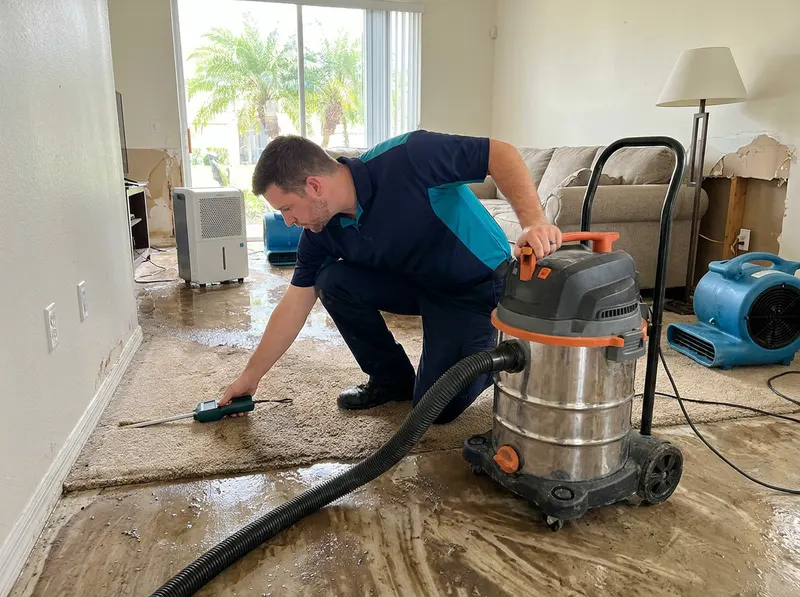
Storm flooding in Orlando behaves differently from a burst pipe because the water is Category 3 (grossly contaminated), it carries lawn chemicals, road runoff, and sewage overflow from stormwater systems near the Little Wekiva River and area retention ponds. Flood cleanup therefore includes discarding porous materials rather than drying them: carpet pad, particleboard, and drywall below the waterline are removed and bagged, not salvaged. Hardwood, tile, and structural framing can often be dried in place once contaminants are cleaned off and antimicrobial is applied.
Hurricane season (June 1 through November 30) drives most flood calls, with the heaviest volume after named storms push water into low-lying neighborhoods. Homes in Orlo Vista, Rio Pinar, and the areas around Lake Underhill and Little Lake Barton flood repeatedly during high-rain events, and slab foundations across Orange County let water wick up into walls fast. The cleanup sequence is straightforward: 1) extract standing water with truck-mount and portable pumps; 2) remove saturated porous materials and haul debris; 3) clean and sanitize framing and hard surfaces with EPA-registered antimicrobial; 4) set air movers and dehumidifiers; 5) monitor daily with a moisture meter until framing reads 12-15%.
Storm and flood cleanup is the right service when floodwater entered from outside, over a threshold, through a garage, or up through a slab. Interior clean-water leaks (a supply line, a water heater) are a different, usually cheaper category because the water is sanitary and more material can be saved. A single flooded room with 2-3 inches of water sits near the low end of the range, while a home that took a foot of water across the ground floor lands at the high end. The trade-off is speed against salvage: extraction within the first 24-48 hours limits mold growth and keeps more of the structure driable, while flood water sitting past 72 hours usually forces wider demolition.
One fact homeowners often miss: flood damage from rising surface water is not covered by a standard homeowners policy and requires separate flood insurance, typically through the National Flood Insurance Program. Documentation matters for those claims, so moisture readings and photos are recorded before demolition begins.